Gemini 4 Argon Arrives in the Gemini App: What Changed
Google announced Gemini 4 Argon in the Gemini app on October 13, 2026. Here is what the task interface means for users and what to check.
What Google announced on October 13, 2026
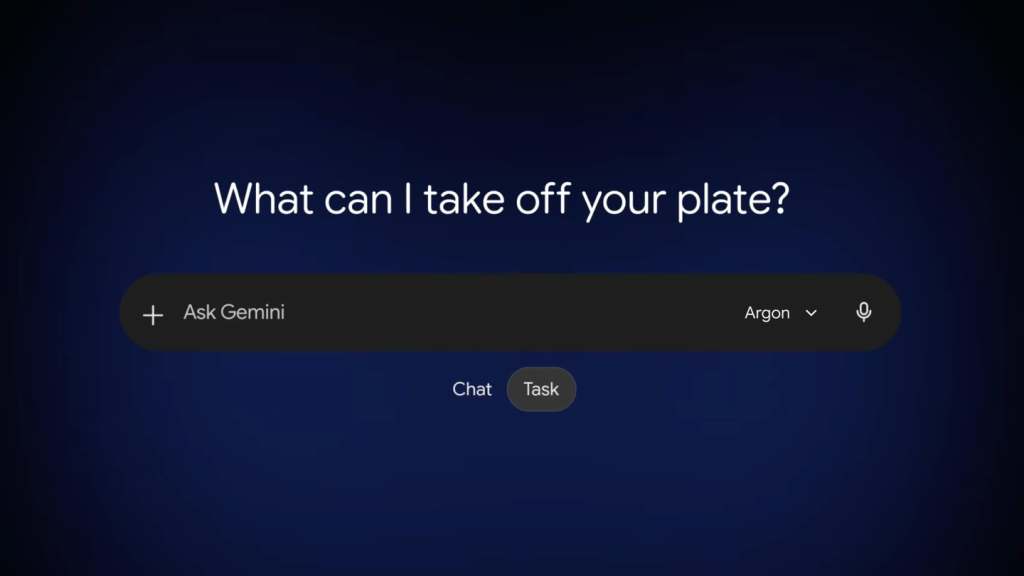
Google announced Gemini 4 Argon access in the Gemini app for Google AI Pro and Ultra subscribers. The update describes more direct answers, progress updates during longer work, a chat-to-task switch, and additional connected applications. Google also says its Antigravity coding interface is available inside the Gemini macOS app. These are the company's launch descriptions, rather than findings from our testing. Read Google's dated announcement.
The concrete interface change
The announcement places ordinary conversation and delegated work in the same window. Users can choose tasks and let Gemini continue work while they are away. Google reports connections with more than 40 apps. The practical distinction is between requesting an answer and authorizing a workflow; readers should inspect the scope of each connected service before using it.
Editorial analysis: the task boundary matters
A chat response has a visible stopping point: the model returns text and the user decides what to do with it. A delegated task needs a more explicit contract. Before trying this interface, write down the intended result, acceptable inputs, a time limit, and the point at which the assistant should ask for approval. That small preparation step makes a long-running task much easier to judge when you return.
Consider a weekly research brief. Asking for a comparison of three public product announcements has a clear scope. Asking an assistant to manage a launch could include drafting, scheduling, spending, and publishing. Those actions have different consequences. The useful test is whether the task description makes those boundaries understandable to both the user and anyone reviewing the result.
For a solo professional, the first pilot should produce a reviewable artifact: a draft agenda, a source-linked brief, or a proposed task list. Keep the original material and compare the output with it. Measure whether the assistant preserved names, dates, constraints, and unresolved questions. A polished document can still omit a crucial qualification, so formatting should not be the only acceptance criterion.
For an organization, connected apps require a different conversation from model quality. Ask which account is connected, what information it can read, and who can change that connection. A service connected to a personal account may have a different audience from an organization workspace. Put the ownership of shared outputs into the pilot design so that a useful result does not become difficult to locate or maintain later.
Availability and limits
The October 13 announcement identifies paid subscription access. It does not establish that every account, region, app connection, or task type has identical support. A launch article is a snapshot, so readers should check the interface and applicable help documentation for their own account before changing a recurring process. This article does not promise background execution duration or a particular completion rate.
What readers should verify before relying on it
Run one bounded assignment with material you can independently review. Record the request and the result, then check whether claimed completed actions actually happened in the destination application. For research, open the cited sources. For a draft, compare the final text with the brief. For coding, review the diff and run the relevant checks. Choose acceptance criteria before seeing the answer to avoid confusing an impressive demonstration with a dependable workflow.
Also decide how unfinished work should be reported. A useful task result should distinguish completed steps, assumptions, and blocked steps. If you need a human review before an external action, state that requirement in the request and verify that the product provides an appropriate checkpoint. Start with low-cost, reversible work and expand only when the evidence from your own tasks supports doing so.
Factual FAQ
Is this an API launch guide?
No. This report covers the app announcement. API deployment has separate documentation and account requirements.
Have these features been independently tested here?
No. The announced changes are attributed to Google; the evaluation suggestions are our editorial recommendations.
Additional primary-source context
The connected-app documentation shows why access should be checked service by service. Google lists US, English, personal-account requirements for the Instacart connection and says it cannot place orders. The OpenTable guide lists a different eligibility boundary: adults with personal accounts in the US or UK, in English. Its current limitations include payments and modifying existing reservations. Those details qualify the broad app-connectivity headline.
Supporting documentation: Google Help: Instacart connected app; Google Help: OpenTable connected app.
Sources and reporting note
Google: official announcement (2026-10-13). Reporting checked on October 16, 2026. This article separates the announced facts from our editorial analysis; it is not a hands-on product test. Feature access and program terms can change after publication.