NVIDIA and Microsoft Unveil RTX Spark Windows AI PCs
On October 7, 2026, NVIDIA and Microsoft outlined RTX Spark Windows PCs and local agent software. We separate the launch from buying decisions.
What NVIDIA announced on October 7, 2026
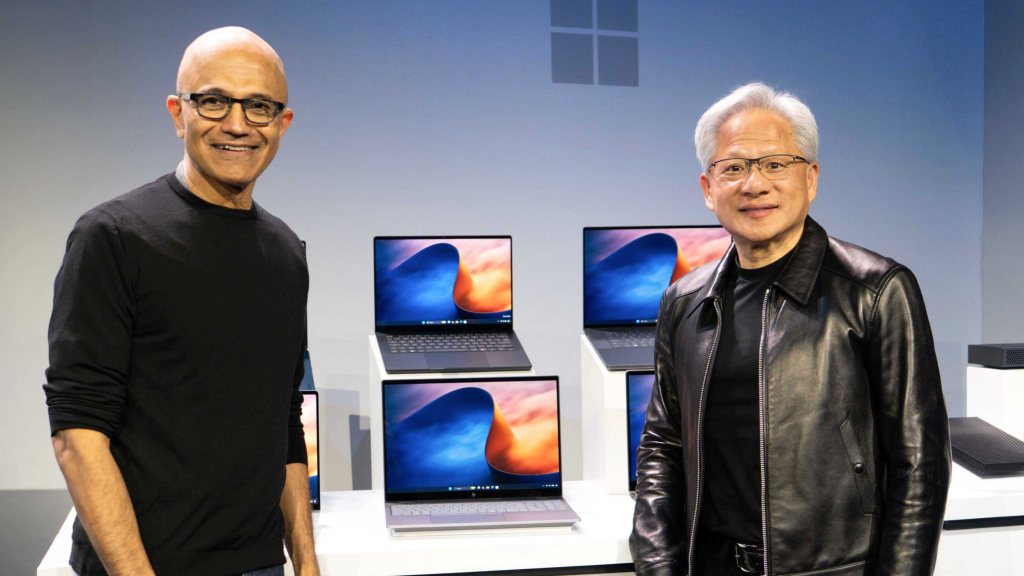
NVIDIA described a joint Windows AI event with Microsoft, including RTX Spark laptops and compact desktops, operating-system support for agents, and a preview of DGX Station for Windows. The announcement said laptop preorders began that day, with laptop availability planned for October 16 and compact desktops in November. These are the launch's stated milestones. Read NVIDIA's official event report.
The concrete platform direction
The announcement connects local model execution with Windows applications and agent workflows. It also describes Microsoft Execution Containers as operating-system infrastructure for controlled agent execution. RTX Spark and the larger DGX Station preview are different product categories, so their capabilities, availability, and intended users should not be combined into a single specification or purchase claim.
Editorial analysis: start with the workload
A local AI computer should be evaluated against the work it must perform. Write down the model, expected context size, concurrent tasks, and supporting software before comparing hardware. A system that is comfortable for interactive experiments may be a poor fit for continuously serving several users. Conversely, buying for the largest imaginable model can leave a team paying for capacity it rarely uses.
There are several practical questions beyond headline compute. Can the required model and runtime run in the intended environment? What happens when the user is also compiling software, editing video, or holding a meeting? Does the workload need to continue after the person logs out? Test the complete routine rather than an isolated prompt that uses all available resources for a few seconds.
For developers, reproducibility matters. Record the model version, quantization, runtime, and settings used in any trial. Keep the input and expected result so another machine can run the same test. Without that record, a comparison can accidentally measure different software configurations rather than different hardware. Report time to an acceptable result, not only a peak throughput number from a vendor slide.
For an IT team, a local agent is also a managed application. Decide how updates are delivered, where logs are kept, and which files or services the agent can reach. An experiment on one developer's laptop may depend on personal credentials and manual setup. A repeatable deployment should replace those hidden assumptions with documented configuration and a clear owner for support.
Availability and limits
The event report gives a launch timetable and product descriptions, rather than an independent comparison of systems in retail configurations. Readers should verify shipping status, regional availability, exact memory and storage, supported software, and warranty terms on the product page for the machine they are considering. This article does not invent a retail price or imply that a previewed enterprise workstation is already shipping.
What readers should verify before buying
Build a short representative test pack. Include an ordinary task, a long-context task, and a situation in which the model must say it lacks information. If the use case involves code, include the repository and checks. If it involves documents, include the source material and a factual review checklist. Assess whether the system solves the problem reliably enough to justify its place in the workflow.
Compare the ownership model as well as the hardware. A local setup may still require online services, model downloads, updates, or connected applications. List those dependencies explicitly. Ask which operations can occur without a network connection and which cannot, then verify that distinction in a controlled trial. Local execution of one component does not automatically describe the behavior of the entire application.
The most useful purchase decision is therefore specific: this configuration, running this software, for this documented workload. That is a stronger basis for planning than treating a new product family as a universal answer to every AI task.
Factual FAQ
Are RTX Spark and DGX Station the same product?
No. The event discussed separate PC and enterprise workstation offerings.
Does this report contain independent hardware benchmarks?
No. It reports the announcement and explains what a representative evaluation should include.
Additional primary-source context
NVIDIA maintains separate product pages for RTX Spark and DGX Station for Windows. They are the appropriate place to check each offering’s specifications and current call to action, rather than mixing figures from the two systems. Keep those product details separate from the October 7 event timetable. A workstation preview and a laptop preorder are different stages in a purchasing process.
Supporting documentation: NVIDIA: RTX Spark product specifications; NVIDIA: DGX Station for Windows product information.
Sources and reporting note
NVIDIA: official announcement (2026-10-07). Reporting checked on October 16, 2026. This article separates the announced facts from our editorial analysis; it is not a hands-on product test. Feature access and program terms can change after publication.