Auphonic
Auphonic is a web service that automatically levels, denoises and masters spoken-word audio, with transcripts, chapters and an API for podcasters, educators and media teams.
What is Auphonic?
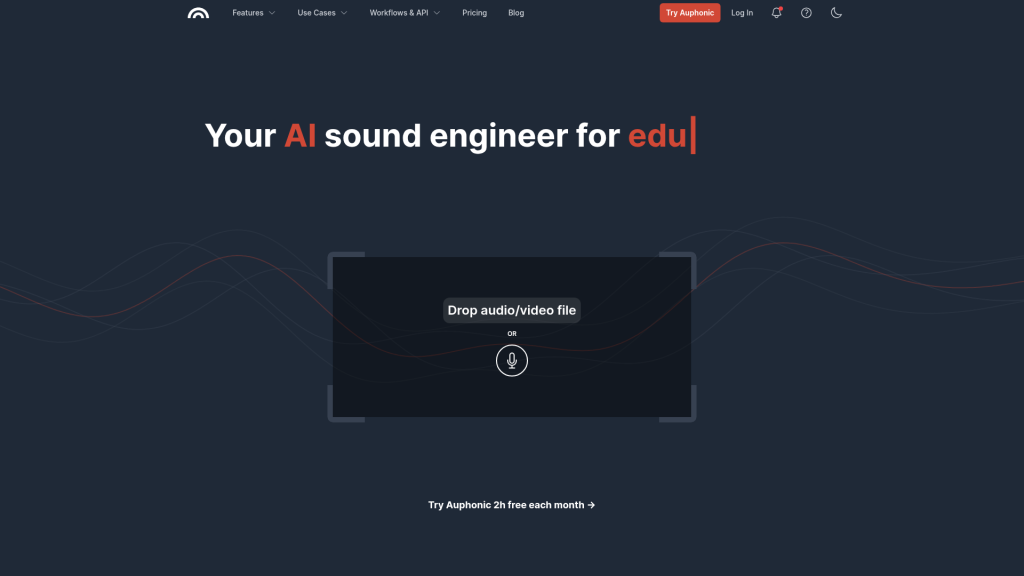
Auphonic is a web-based audio post-production service that uses machine-learning algorithms to clean up and master spoken-word recordings automatically. You upload an audio or video file, pick a preset, and the service levels speakers, reduces noise and reverb, applies loudness targets and returns finished files. It is aimed at podcasters, educators, video creators, audiobook narrators and broadcasters who want consistent, professional sound without learning a full audio workstation.
Beyond the web app, Auphonic offers an API, a command-line tool and integrations with automation platforms, so production teams can plug it into larger publishing workflows.
Key Features of Auphonic
Noise and Reverb Reduction
You can choose whether to remove only steady background noise or also fast-changing sounds, and whether music in the recording should be kept or stripped out. Presets such as a voice cleaner and a beta studio-voice mode cover common situations.
Intelligent Leveler and Loudness Targets
The leveler balances volume between different speakers, music and speech without manual compression. You can set target loudness, true-peak limits and loudness range so episodes meet platform or broadcast specifications.
Automatic Cutting
Auphonic can trim silences, coughs and filler words such as "uhm" in several languages, which shortens editing time for interviews and lectures.
Multitrack Processing
For recordings with separate microphone tracks, the multitrack mode creates a mixdown with automatic ducking, noise gating and mic-bleed removal. Free users can run multitrack productions shorter than 20 minutes.
Transcripts, Chapters and Video Output
Paid plans add multilingual speech recognition with automatically generated show notes, summaries and chapters in a shareable transcript editor. The service can also export video podcasts and audiograms with burned-in subtitles.
Workflows, API and Publishing
Results can be pushed to services such as YouTube, Libsyn, Podbean and SoundCloud or to cloud storage. Watch folders, Zapier, n8n, a Zoom integration, the REST API and a CLI support automated pipelines, and white-label options exist for companies.
Auphonic Pricing
Auphonic bills by the length of audio processed rather than by seat. Everyone gets two free hours each month; beyond that you can buy recurring monthly hours (cheaper per hour, but unused hours do not roll over) or one-time credits that never expire. Paying yearly saves about 20%. Prices are listed without VAT, and EUR pricing is also available.
Prices checked on October 27, 2026; check the official pricing page for current plans.
Yearly and business accounts add priority processing, team accounts and priority support. Credits are charged only for successful productions, and a minimum of three minutes is billed per production.
Who Should Use Auphonic?
- Podcasters who want every episode levelled and loudness-normalized with one click.
- Universities and educators cleaning up lecture recordings at scale.
- Video creators who need clearer dialogue and subtitle files.
- Audiobook producers aiming for consistent delivery specs.
- Developers and media companies automating audio processing through the API.
Is Auphonic Worth It?
Auphonic is one of the more mature options for automatic spoken-word mastering, and the free two hours per month are enough for many small podcasts to judge the results. Its strengths are the depth of controls for loudness and leveling, the multitrack mode and the automation options. On the other hand, free productions carry an Auphonic jingle, speech recognition and batch features require a paid plan, and monthly hours expire if you do not use them. It is not a full editor either: if you need detailed manual edits you will still want a separate audio or video editor. For creators who publish regularly and value consistent sound with little effort, the per-hour pricing is easy to scale up or down.